
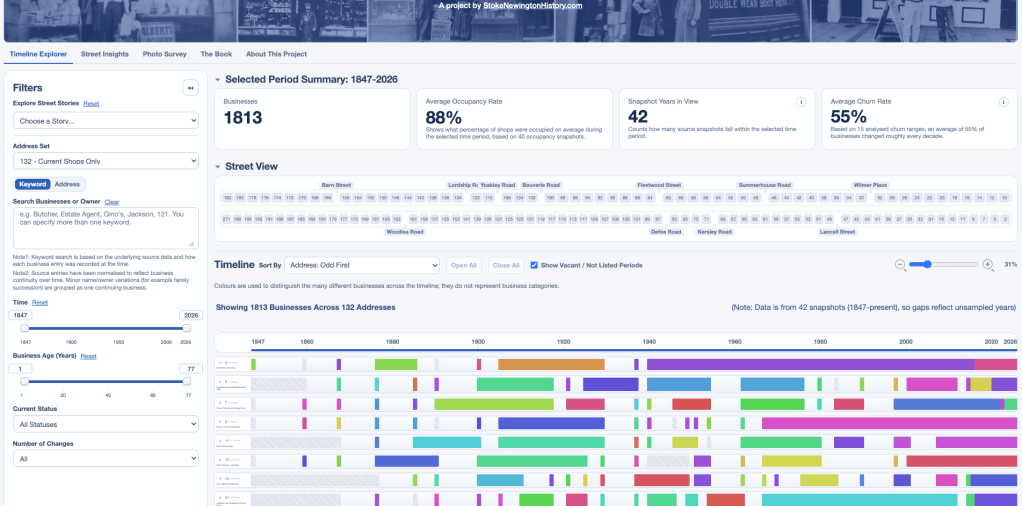
A new dedicated site is now live for The History of Every Shop in Stoke Newington Church Street, a major strand of my ongoing research into the commercial history of Church Street. Drawing on years of work documented in the master spreadsheet, it brings that research into a more accessible and engaging form through an interactive timeline that can be filtered and sorted in different ways, a photo survey of shopfronts, and an insight page that highlight wider patterns in occupancy, change and continuity from the 1840s to the present day.
Exploring the Street in New Ways
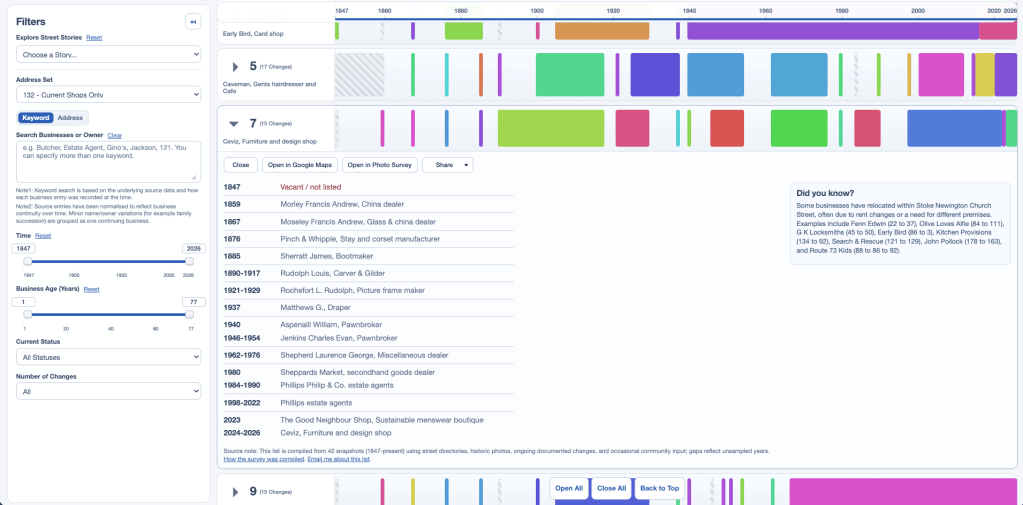
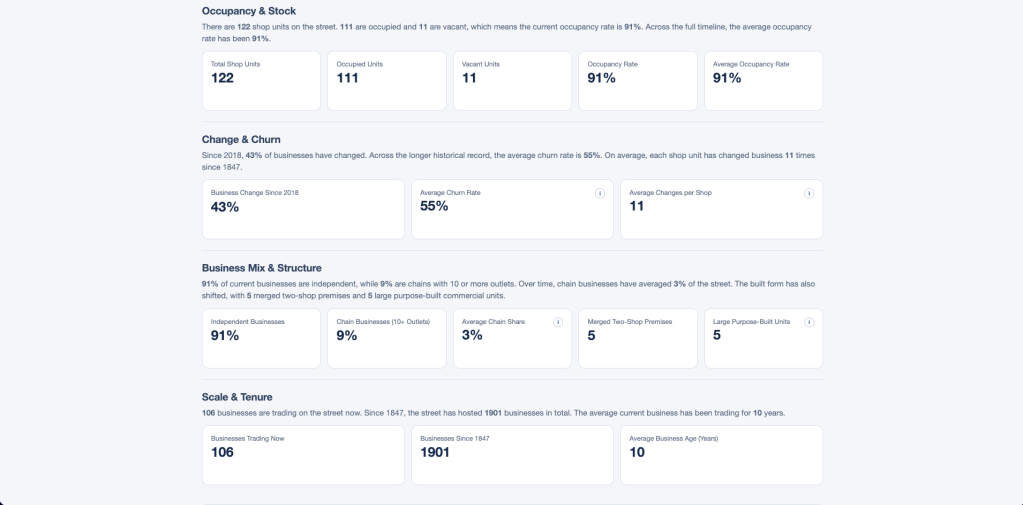
The new site is designed to make the history of Church Street easier to explore, whether you want to follow a single address, trace a business over time, or step back and look at broader patterns across the whole street. The interactive timeline allows users to browse each property across different periods, filter results, sort addresses, and focus on particular themes or types of change. Alongside this, the Street Insights section draws attention to long-term trends in occupancy, turnover, business mix and continuity, helping place individual shops within the wider commercial history of the street.
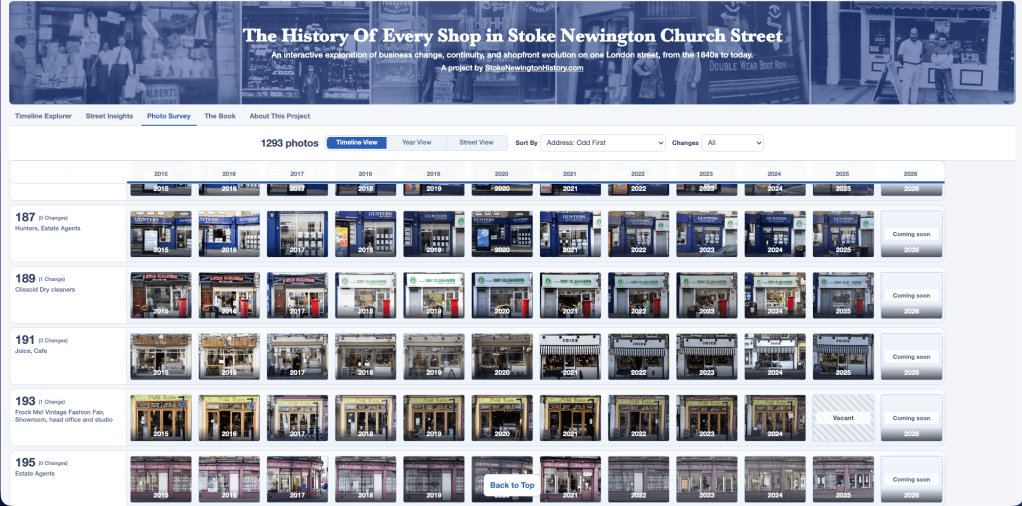
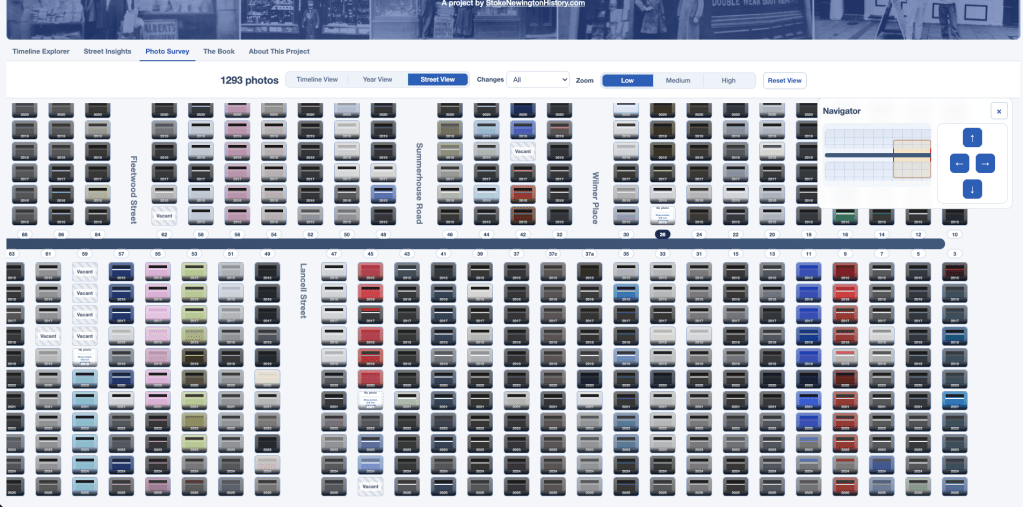
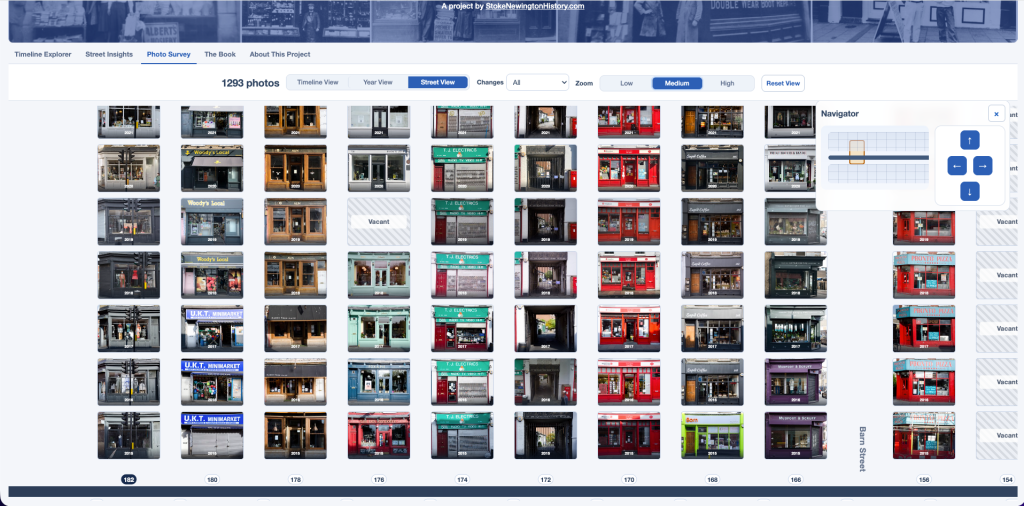
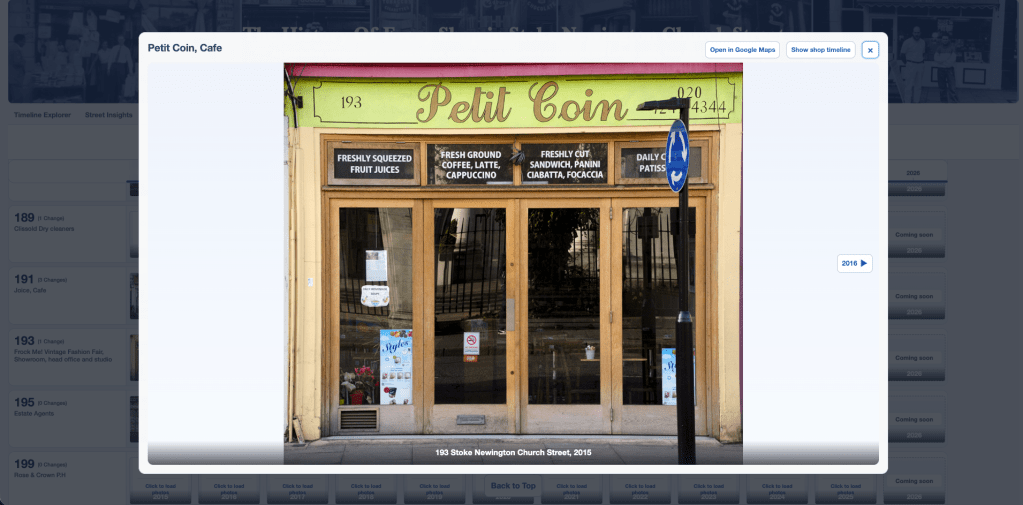
A major part of the project is also the photo survey, which brings together a growing visual record of Church Street’s shopfronts. This makes it possible to compare premises year by year and to see how the street has changed in appearance as well as in use. Together, these sections are intended to make the underlying research more open, navigable and useful, whether for local residents, researchers, or anyone with an interest in the changing life of Stoke Newington.
From the Master Spreadsheet to a Public Resource
This dedicated site has grown directly out of the main project to research and document the commercial history of Church Street. The master spreadsheet remains the foundation of the work, but this new sub-project is part of a wider effort to present the material in formats that are easier to engage with. Like the book and Windows into the Past, it is intended to make the research more accessible beyond the spreadsheet itself, while still reflecting the depth and detail of the underlying record.
The site will continue to develop as the research grows, but this launch marks an important step in turning a long-running body of work into a public resource that can be explored in multiple ways. I hope it will be useful both to those looking up particular shops and addresses, and to those interested in the wider story of how Church Street has evolved over nearly two centuries.
 Stoke Newington History