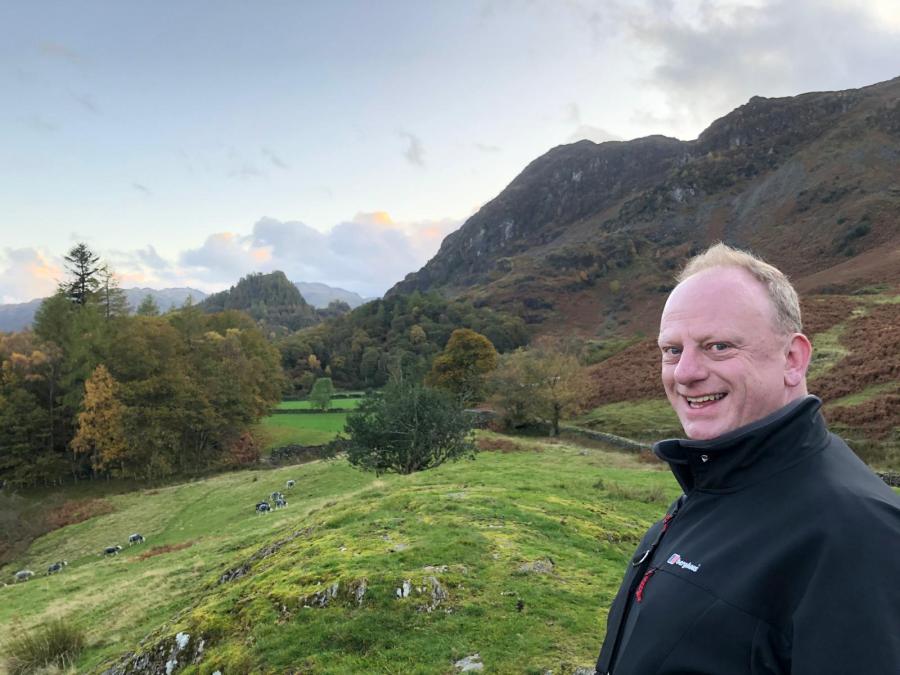
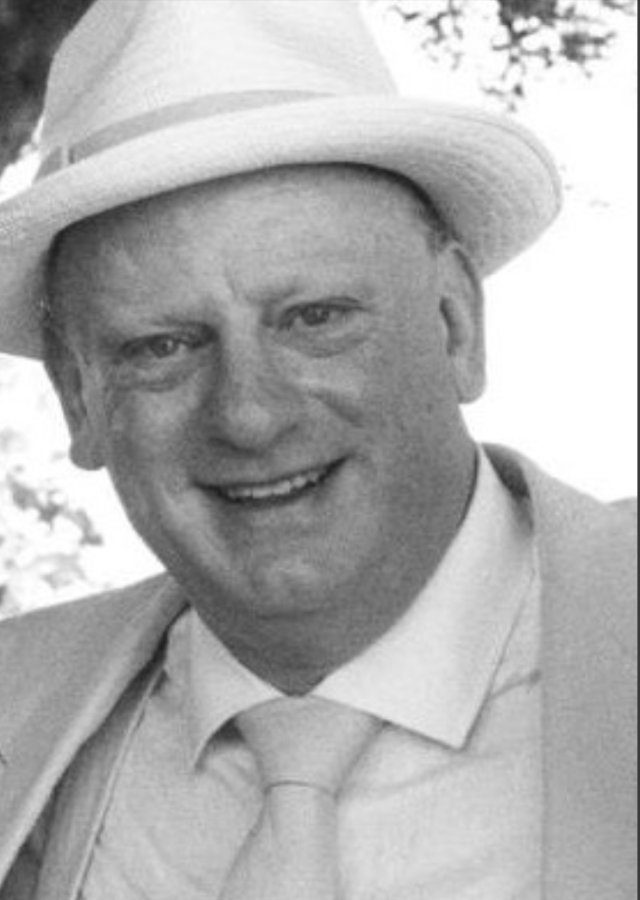
On October 1st, Nick Perry, a tireless champion of heritage conservation and a remarkable force in Hackney, passed away suddenly. His dedication to preserving heritage and promoting local history left an enduring mark on the borough. I had the privilege of knowing Nick as a dear friend over the past ten years and witnessing firsthand his passion and commitment. His legacy will be cherished by all who shared his love for Hackney’s rich history.
Nick was extremely supportive of my local history endeavours, and in recent years, we were in frequent contact, usually on WhatsApp, discussing primarily local history, along with planning applications, council initiatives, and changes in Stoke Newington’s businesses. Although our relationship was primarily ‘professional’ and somewhat collegial, grounded in shared deep interests, it was also marked by respect, fondness, and friendship.
I learned a great deal from Nick and like to think he learned a few things from me as well, especially when it came to Stoke Newington-specific historical details. He was the best sounding board for almost anything, and he was always the first person I’d turn to for advice, even on matters unrelated to our shared interest in local history.
Master of Many Topics
Nick was the nerdiest person I have ever met. He was extremely inquisitive and possessed a deep and astonishingly detailed knowledge on a wide range of subjects, where you’d typically expect someone to be passionate and knowledgeable about just one or two. Nick, however, was a fountain of knowledge on an impressive variety of often very niche topics, including town planning policies and regulations, architecture, transport, maps, local authorities, trains, infrastructure, history, road signage, bollards, postcodes, masonry, housing, phone numbers, digital audio and video recording, waterways, and coats of arms, to name a few.
I can’t recall a single instance where I asked him a question, whether it was about the origin of a worn-out manhole cover or a peculiar detail in an old map, that he replied, ‘I don’t know.’ Not surprisingly, Nick co-organised Nerd Nite, a monthly event featuring three ‘nerdy’ talks, at which I had the pleasure of presenting on three separate occasions, thanks to him.

Meeting Nick
I first got to know Nick around 2013 through his replies on Twitter to my Stoke Newington history posts. It was immediately clear that he was an expert (at least in my eyes) on planning policies, and his observations, comments, explanations about planning permissions and listed buildings were always extremely insightful.
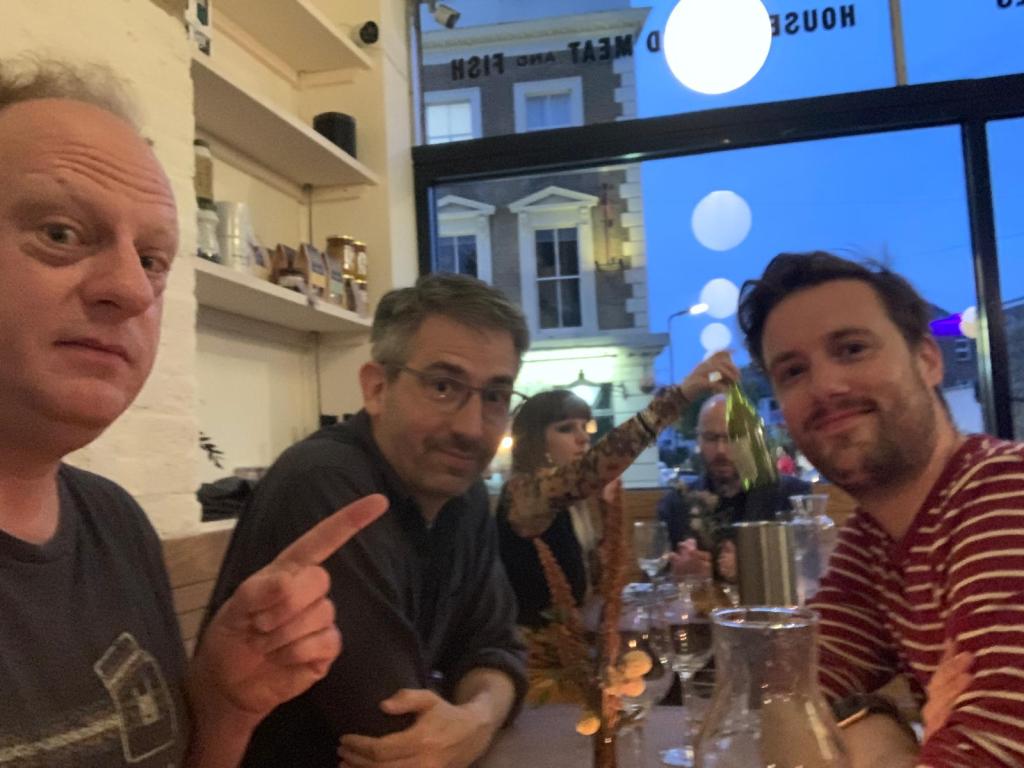
Our mutual interest in local history led us to connect initially via email, typically when I had a niche question for him, such as the name of a particular Victorian architectural feature or the status of a local planning application for an old building or vacant shop. He’d also forward me questions he occasionally received from people in his role as chair of the Hackney Society at the time. Between 2014 and 2016, I organised several meet-ups at a pub for a small group of like-minded people, and that’s how I got to know Nick beyond emails.
My Local History Partner in Crime
Those small meet-ups around a pub table led me, in late 2016, to start my regular event, ‘Stoke Newington History Talks,’ which Nick gradually became an integral part of, helping to organise and execute. He generously provided audio and video support, as well as valuable guidance, which I greatly appreciated. I couldn’t have organised three online events during COVID without him and his expertise, and he has been instrumental in all the events since.

Between 2022 and 2023, Nick, myself, and two other local history enthusiasts, Richard Young and Rachel Tobyn, organised three local history ‘drop-in sessions’, where people were invited to come in and ask us questions. Nick, armed with his laptop and a few maps, relished the opportunity to answer questions and solve the mysteries and queries we were presented with.
This initiative has now evolved into a lively WhatsApp group with nearly 20 members, where I often share questions I receive from people on social media or my website, hoping group members can help me answer them. Nick was one of the most active members, pivotal in answering many queries, often with a healthy dose of wit and humour. He frequently shared snippets of maps, census information, planning documents, Land Registry entries, and many other sources he relied on to ‘crack a case.’
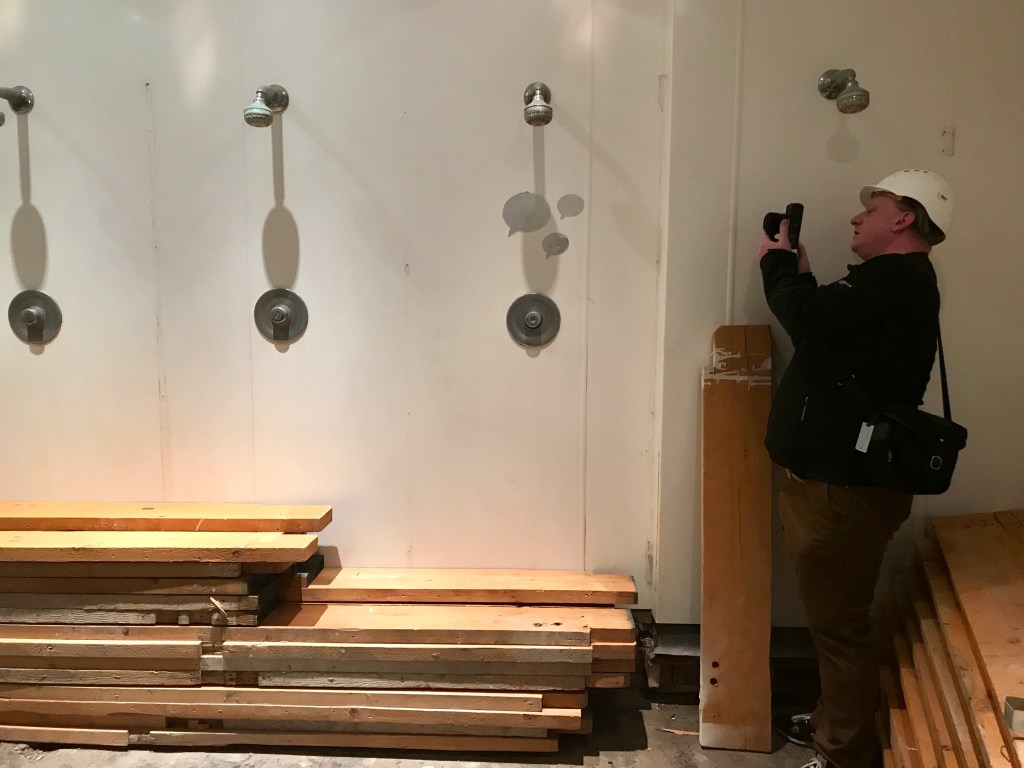
Nick was the first person I thought about inviting to join me when I was offered a tour of Abney Chapel in Abney Park during its restoration or when I had an extra ticket for the filming of Antiques Roadshow in Clissold Park, knowing he’d be excited to come along, most likely with a camera, ready to explore and geek out over everything he saw. He did the same for me, inviting me to visit the sites of the former Savoy Cinema on Stoke Newington Road, which had stood derelict for decades before being renovated and transformed into a performance venue, and the former Sunstone women’s gym, which was being converted into the Tower Theatre.

A Tireless Activist
Nick’s day job was in IT, but outside of work, his serious hobby was town planning, and he was a passionate heritage conservation activist involved in various campaigns and initiatives across Hackney. From protecting pub buildings and opposing problematic development proposals to ensuring that historic features of local buildings weren’t obscured by billboards lacking advertising consent, he was always engaged. Nick never turned his back on any issue involving heritage, conservation, or planning control. Within minutes of raising a concern with him, you’d find yourself CCed on an email he’d sent to the relevant people to get the matter addressed.
The following are just a few examples of Nick’s accomplishments and initiatives he got involved in, often leading the charge. I’m sure there are many more I wasn’t aware of.
2013-15: Stokey Local Campaign
As a key leader in the Stokey Local campaign, Nick helped oppose the Wilmer Place development in Stoke Newington. The campaign focused on the impact the project would have on Abney Park, local businesses, traffic, and the lack of affordable housing. He successfully challenged the developer’s use of a Financial Viability Statement (FVS) to limit affordable housing, securing the release of the FVS, which exposed flaws in the developer’s case. This contributed to the eventual sale of the site, likely preventing the development.
2012-15: Save the Chesham Arms Campaign
Nick was an instrumental figure in the ‘Save the Chesham Arms’ campaign, working to stop the pub on Mehetabel Lane from being converted into flats. His involvement helped ensure the pub remained a community asset.
2013: Saving the Former Duke of Wellington Pub
In Morning Lane, Nick contributed to a campaign that successfully prevented the demolition of the former Duke of Wellington pub.
2016: Red Lion Pub ACV Proposal
Nick spearheaded the proposal to list the Red Lion pub on Stoke Newington Church Street as an Asset of Community Value (ACV) when fears emerged that it might be turned into a restaurant. Thankfully, it wasn’t needed as the pub retained its original use.
2018: N.E Street Signs Survey
As one of the organisers of a project to survey N.E. Signs, Nick collaborated with others to meticulously survey 19th century street signs across Hackney that feature the old London postcode N.E., which was abolished in 1866. As such, these surviving street signs are historically significant and of particular interest, therefore surveying them was important.
2020: Protecting Stoke Newington’s Heritage Street Signs
When I was getting nowhere with the council in my efforts to get it to cease its policy of removing and destroying old street signs deemed no longer fit for purpose, I asked Nick to intervene. As always, he jumped in straight away, and thanks to him, the conversation with the council became much more productive, ultimately leading to the restoration of heritage signs to their former glory. This email Nick sent, which helped unblock my efforts, offers a glimpse into his passion and commitment to heritage preservation.
Dear Andy. I’ve been forwarded the email below by a friend and neighbour, Amir Dotan, who is a part-time historian well-known for his social media covering the history of Stoke Newington. Amir asked why old, heritage street signs were being replaced and what was happening to them. I find the response astonishingly ill-conceived.
The logic might be defensible if made in isolation, but in a wider context, it is a crude that destroys built heritage. I wonder if you might reconsider this approach and perhaps remind colleagues that each time they remove something, it is worth considering what it contributes to our built environment and whether renovation might not add something as well as helping with sustainability.
Although this is not a planning matter, I have no doubt your colleagues in Conservation, Sustainability and Urban Design, within the Planning Service, would be happy to advise on what’s worth keeping and what’s not. Obviously there will be times when removal might be a planning matter in which case it seems sensible that a cautious approach might involve consulting them more, just in case.”
2022: Women of Abney

Nick directed, filmed and edited “Women of Abney”, a film that celebrated the stories of women connected to Abney Park and its history. The production highlighted the contributions of women from diverse backgrounds, bringing their narratives to the forefront and fostering a deeper understanding of the local heritage. It was the perfect combination of two of Nick’s passions: local history and audio/video recording, including editing
2022: Unauthorised Billboard on the Jolly Butchers Pub
Nick identified an unauthorised billboard covering a Victorian tiled mural on the Jolly Butchers pub in Stoke Newington High Street. He swiftly contacted planning enforcement, leading to the billboard’s removal and allowing the historic feature to be appreciated once again.
Final Words
The untimely and heartbreaking passing of Nick Perry leaves a huge void in the many places and special-interest groups he influenced and profoundly impacted. His inspiring legacy, shaped through numerous heritage and conservation initiatives, has helped preserve Hackney’s historic character for future generations. As I write these words, I struggle to imagine who will step in with the same energy, enthusiasm, and deep knowledge to protect and preserve Hackney’s built history at a moment’s notice.
When I walk down the streets now, so many details serve as immediate reminders of Nick. Whether it’s an old street sign, a manhole cover, an intriguing architectural feature on a structure, or an odd extension that likely lacks the necessary planning permission (Nick would always know or at least be able to check quickly).
Next week, I’m going to visit an old house where the owner suspects there’s a remnant of a ‘tunnel’ in the basement. I had been looking forward to going with Nick, watching him carefully inspect every detail and every brick, and then deliver his informed conclusion about the suspected tunnel to the homeowner.
Nick, who loved our local history so much, is now a special part of it. He will be greatly missed.

 Stoke Newington History