
An Unexpected Discovery
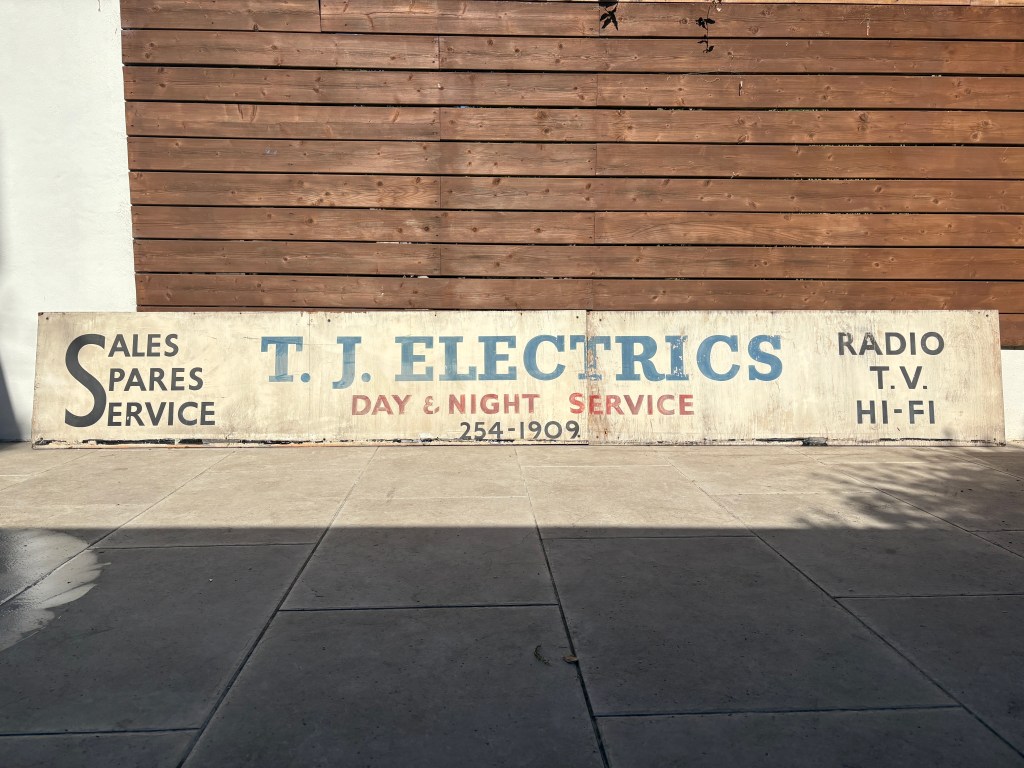
On 26 June 2025, renovation work at 174 Stoke Newington Church Street revealed an unexpected survival. When the existing shopfront was removed, three older signs were uncovered beneath it, including the long-familiar T. J. Electrics fascia and two earlier signs from previous businesses that had occupied the premises.
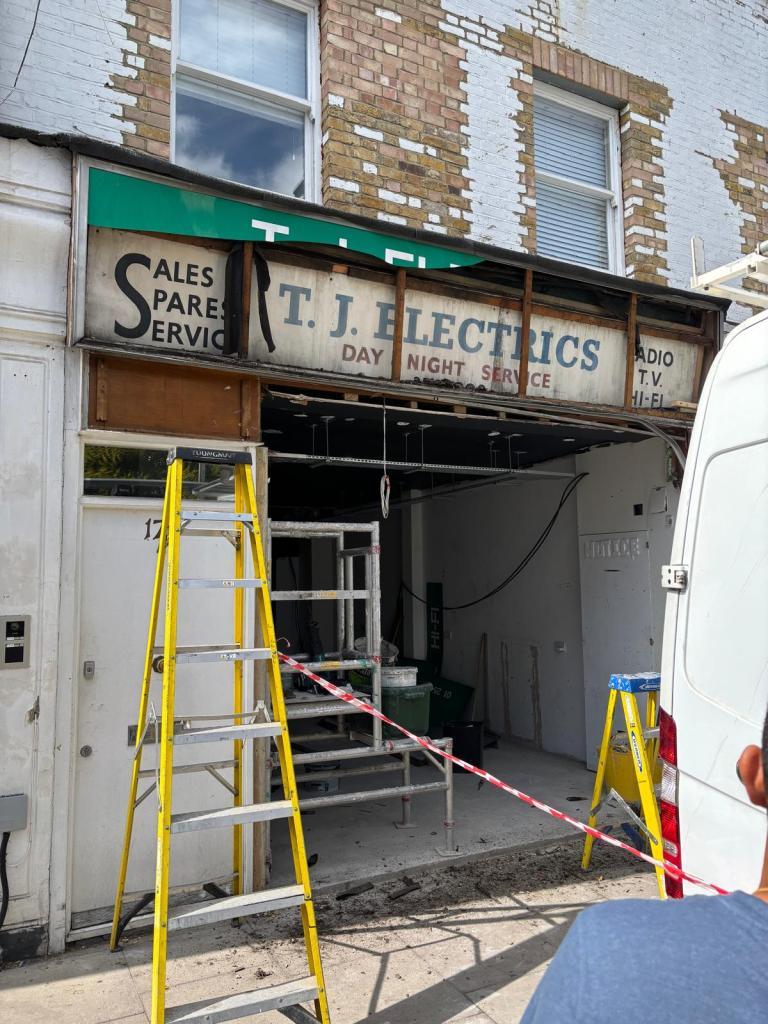
The outermost sign was for T. J. Electrics, which had traded from the shop since 1972. Beneath it were two older signs, including one for Ellen, Ladies’ Outfitter and another for Joyce Terry, Ladies’ Outfitter. For a brief moment, the removal of one frontage exposed several layers of the shop’s commercial history.
John George and T. J. Electrics
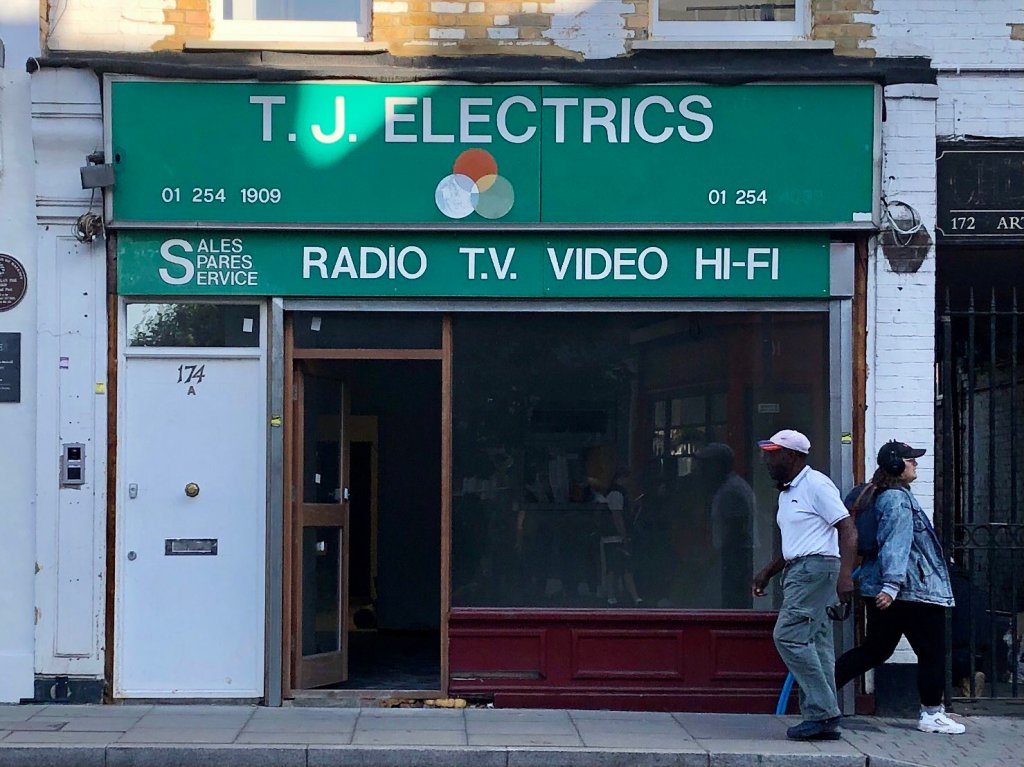
The J in T. J. Electrics stood for John George, who founded the business in 1972. Born in Dominica in 1939, he came to London in 1958 at the age of 17 and later studied domestic electronics in Holloway Road. Before opening his own shop, he worked at Dansette Electronics. He used £300 redundancy pay to establish T. J. Electrics, overcoming racial discrimination from major banks before managing to open his first business account.

T. J. Electrics went on to become one of the few Black-owned businesses in Stoke Newington to trade for more than 50 years. In the 1970s, it was known locally as a place where young people bought car stereos and CB radios, and John George was remembered for his generosity, humour and encouragement of others.
Rushing to The Site
I was informed that the signs had been revealed during the works and went straight to the site. By the time I arrived, the removed material was already being taken away. The T. J. Electrics sign had been loaded into the back of a van along with the other old signs, some of which had already been broken.
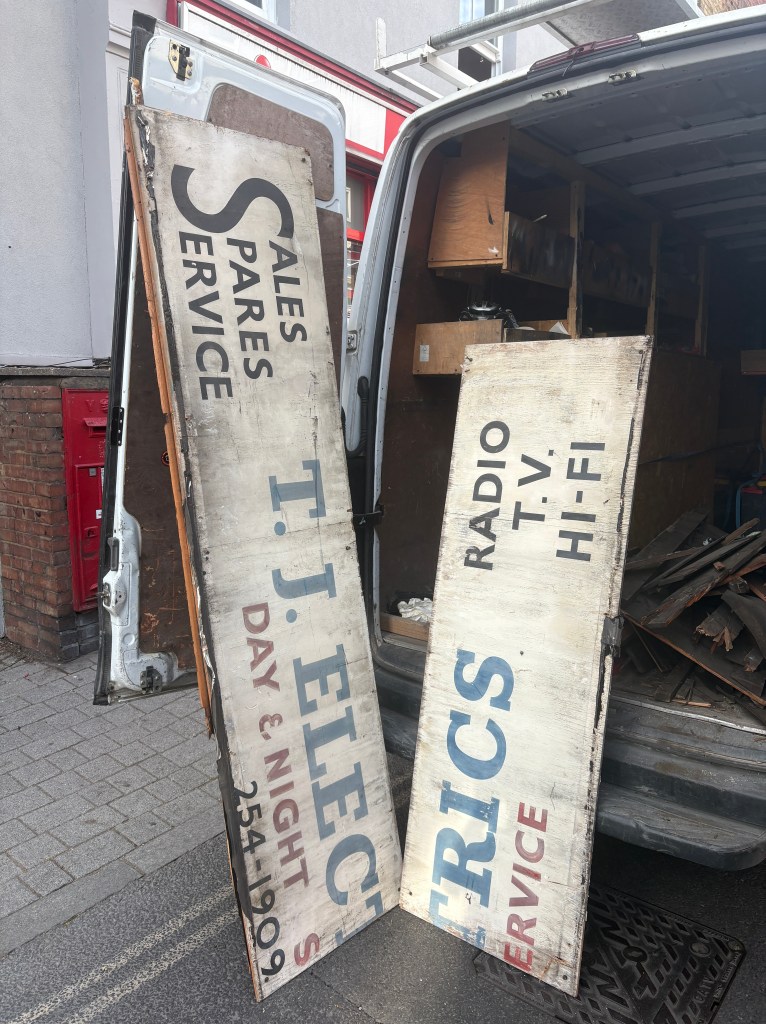
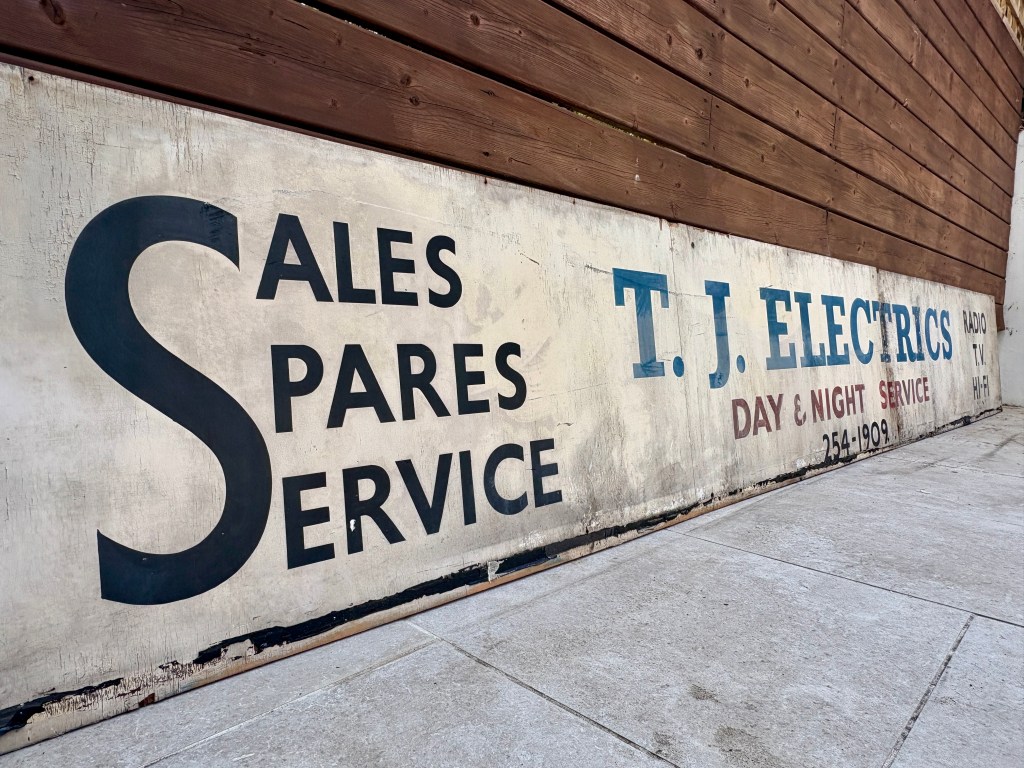
I managed to retrieve the T. J. Electrics sign before it was discarded and to save what remained of the others. The owner of Woody’s Local, who had taken over the premises to open a second shop on Stoke Newington Church Street, very kindly agreed to let me keep the sign. He later dropped it off at my house in the van, which made all the difference, as the sign consisted of two heavy pieces that would otherwise have been very difficult for me to transport. Without that intervention and help, all three signs would almost certainly have been lost during the clearance.
Saving a Piece of Church Street’s History
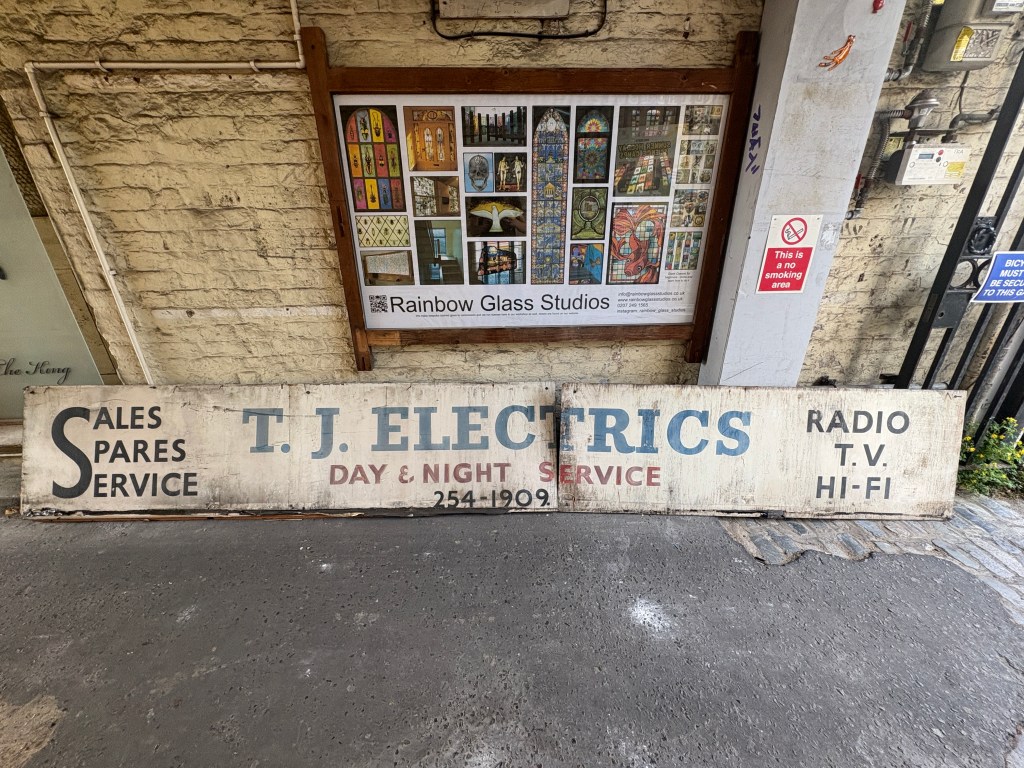
What made the discovery so striking was that the frontage had preserved several phases of the shop’s history in physical form. At a single address, three generations of signage had survived one behind another, recording changes in ownership and use over many decades.
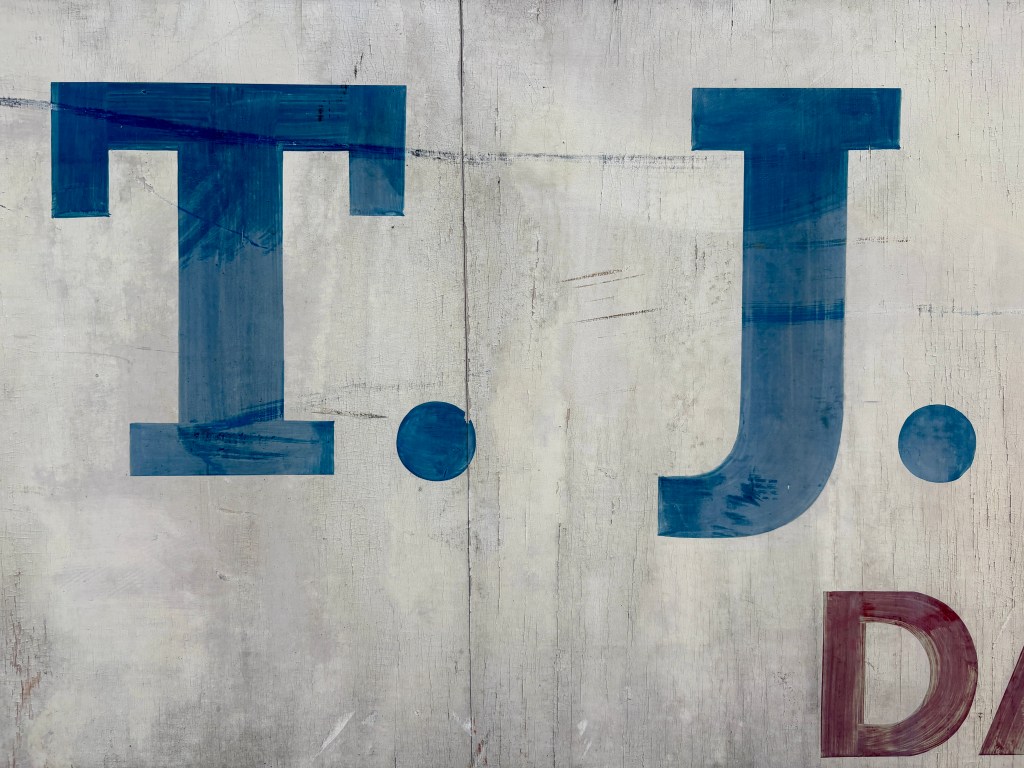
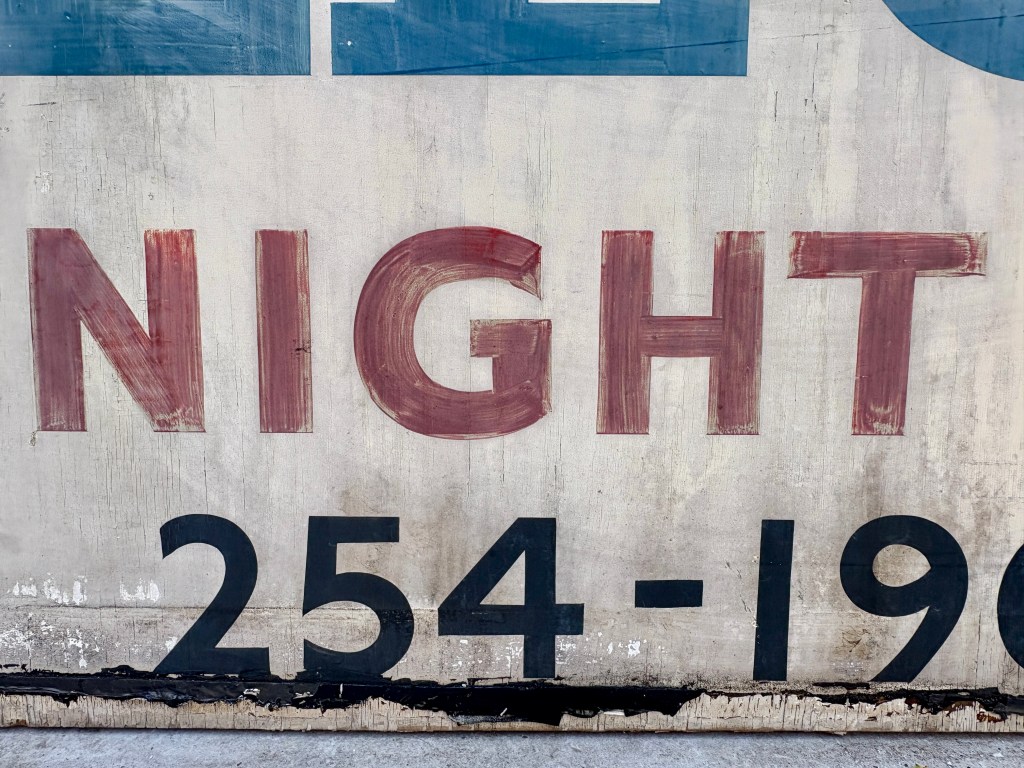
Once cleaned, the rescued T. J. Electrics sign revealed more of its character. The painted lettering and visible brushwork showed the hand-painted craftsmanship that went into signs of this kind. Details like these are part of what make old shop signs worth preserving. They are not just remnants of former businesses, but surviving pieces of local visual history.
Why This Mattered
This was the sort of survival that is rarely planned for and easily lost. When shopfronts are stripped during refurbishment, older material is usually treated as waste. Unless someone recognises its value at the right moment, it can disappear within minutes.
The uncovering of these three signs was a reminder of how much history can remain hidden within ordinary buildings on Stoke Newington Church Street. It also showed how vulnerable that history is when building work begins. In this case, a timely message and a quick journey to the site meant that an important part of the street’s past was not thrown away.


 Stoke Newington History